
The Grand Challengers Podcast Episode #56
The power of mathematics, anti-counterfeiting to “wetware” and how biocomputing will disrupt our future
Guest: Fred Jordan
December 30th, 2025
Episode Teaser
Introduction
“…Innovation often lies in the intersection of different fields, which normally do not meet…”
Fred Jordan is a scientist, entrepreneur and Co-Founder of FinalSpark and AlpVision in Vevey Switzerland. A trained physicist with a passion in science fiction, Fred is pushing the boundaries and disrupting our technological landscape through his work in pioneering anti-counterfeiting technology, and, more recently in biocomputing through his deeptech startup FinalSpark. Fred has not shyed away from acquiring new skills in biology and thinking differently in order to chase his passion and fascination for making ideas that have to date only been known in science fiction a reality.
On today’s show, Fred and I dive deep into his incredible journey, from seizing opportunities to work with early supercomputers to building two major startups in completely different areas. Fred shows us how mathematics is truly a powerful tool to save ink and that ‘using the real thing’ in biocomputers or “Organoid Intelligence” can either challenge or complement our current semiconductor and AI industry and significantly benefit the planet.

Biography
Dr. Fred Jordan is a Swiss scientist and entrepreneur, co-founder of FinalSpark, a company pioneering a completely new computing paradigm based on living neural networks. After earning a PhD in signal processing from EPFL, he co-founded AlpVision, a world leader in digital anti-counterfeiting technologies, before turning his attention to the next revolution in computation. At FinalSpark, Jordan leads the development of biocomputers that use networks of human-derived neurons cultured in vitro and interfaced with electronics, capable of performing information processing with energy efficiency millions of times greater than conventional chips.
This disruptive approach challenges the foundations of the semiconductor industry and opens the way to an entirely new field — biological computing. FinalSpark’s Neuroplatform allows researchers worldwide to remotely access and program living neural networks, providing the first commercial infrastructure for wetware computation. By merging biology and engineering, Dr Jordan’s work positions FinalSpark as a frontrunner in a sector poised to redefine how intelligence and computation are physically implemented. Known for his hands-on, research-driven leadership, he continues to push the boundaries of what is technologically possible in computing.
Resources Related to the Episode
- Fred is the Co-Founder of AlpVision and FinalSpark. He founded the companies together with Dr. Martin Kutter
- Let’s start with a summary of some science fiction works, some mentioned and others related to the topics we discussed today and our interests.
| AUTHOR | NOTABLE WORKS | THEMES |
| Arthur C. Clarke | The Song of Distant Earth The City and the Stars | Space exploration, cosmic scale narratives, scientific speculation, technological prophecy |
| Adrian Tchaikowsky | Children of Time Series The Final Architecture Series | Space opera, evolutional and biological sci-fi, post-apocalyptic transformation |
| Cixin Liu | The Three Body Problem Trilogy (The 3-Body Problem, Dark Forest and Death’s End) | Space exploration, alien contact, astrophysics |
| Isaac Asimov | I Robot The Naked Sun Foundation | The Three Laws of Robotics, Psychohistory and social sciences, AI Ethics |
| James A. Corey | The Expanse Series | Space exploration, cosmic scale, human civilization advancement, alien contact |
| Philipp K. Dick | Do Androids Dream of Electric Sheep | Cyberpunk, AI and Human Relations (BladeRunner is based on Dick’s book) |
| William Gibson | Neuromancer The Peripheral Count Zero Johnny Mnemonic | Cyberpunk, “Wetware” computing, organic computers, street-level perspectives |
- The City of Vevey
- The history of Nestle – Vevey is its birthplace – founded in 1867
- Milk chocolate was invented in Vevey in 1875
- The Sinclair ZX81 – the computer Fred spent many hours writing software on
- Cray Supercomputer T3D
- EPFL – The Swiss Federal Institute of Technology Lausanne
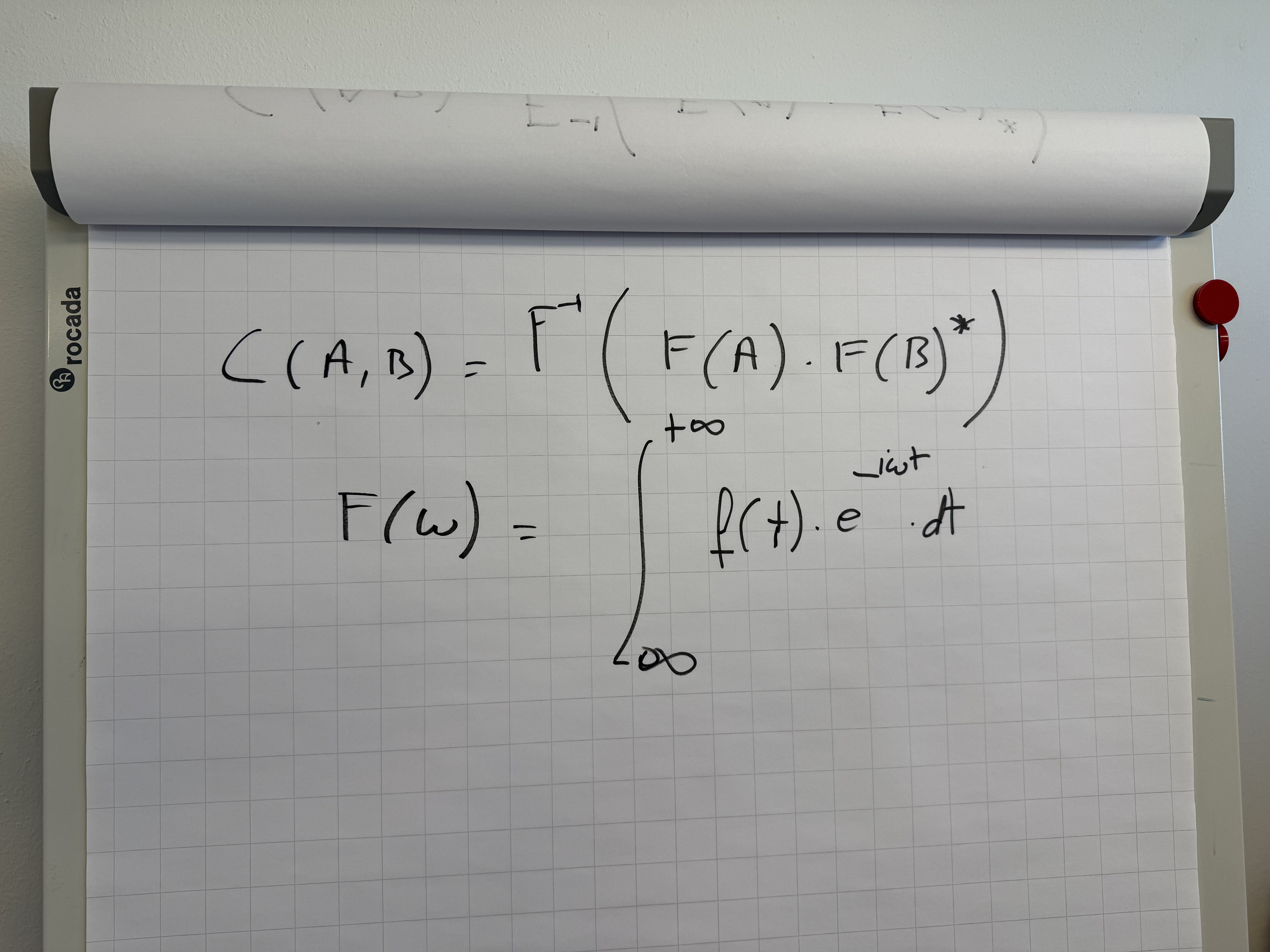
- The two key math equations (correlation and Fourier Transform) are shown in the image below
- The Spherical Cow story and the book that I mentioned with the same title: Consider a Spherical Cow: A Course in Environmental Problem Solving by John Harte [View on Amazon]
- AlpVision – cryptoglyphs are indeed linked to AlpVision in Google Searches
- The Swiss Passport Technology & Swiss Bank Notes Technology
- Some pictures from my visit to FinalSpark and AlpVision in Vevey including a look under the microscope


- What is Artificial General Intelligence (AGI) and Generative AI?
- Google’s DeepMind Website and the DeepBlue computer
- Moore’s Law in the age of AI
- Gordon Moore coined in 1965 – the number of transistors on an integrated circuit doubles approximately every 2 years – a guiding principle for the semiconductor industry – we are approaching the limits of this law (physically)
- NVidia’s CEO Jenson Huang said that AI chips are improving faster than Moore’s Law
- Currently, billions of transistors on smartphone chips
- Limitations including physical and technological, speed of light (limit of how fast signals can travel), heat generation and dissipation, quantum effects of miniaturization
- The Turing Test
- Alan Turing’s Morphogenesis Model: Turing, A. M. (1952) The Chemical Basis of Morphogenesis. Philosophical Transactions of the Royal Society of London. Series B, Biological Sciences, Vol. 237, No. 641. (Aug. 14, 1952), pp. 37-72. [PDF]
- What are Large Language Models? A practical guide
- Genetic Programming vs. Genetic Algorithms
- Reservoir Computing
- Fernando, C. and Sojakka, S., 2003, September. Pattern recognition in a bucket. In European conference on artificial life (pp. 588-597). Berlin, Heidelberg: Springer Berlin Heidelberg. [Link]
- How to Build a Neural Network from a Bucket of Water – a nice article on the topic
- Our Biocomputing/Organoid Intelligence or Wetware Discussion:
- A history of biocomputing
- Cortical Labs in Melbourne, Australia
- The Bloomberg documentary I mentioned, a great resource to check out: Here’s How Biocomputing Works And Matters For AI | Bloomberg Primer
- Doglin, E., (2025) Brain tissues, assemble! Inside the push to build better brain models. Nature 641, 809-812 (2025) [Link]
- FinalSpark’s Butterfly Demo
- What is Electrophysiology?
- Barros, M.T., Kagan, B.J., Hartung, T. and Smirnova, L., 2025. Intersection between the biological and digital: synthetic biological intelligence and organoid intelligence. Frontiers in Cellular Neuroscience, 18, p.1542629. [Link]
- Scientists target ‘biocomputing’ breakthrough with use of human brain cells – a Financial Times article
- Fred’s Frontiers Paper:
- Jordan, F.D., Kutter, M., Comby, J.M., Brozzi, F. and Kurtys, E., 2024. Open and remotely accessible Neuroplatform for research in wetware computing. Frontiers in Artificial Intelligence, 7, p.1376042. [Link]
- Visit FinalSpark’s Website for more details on ongoing activities as well as their Discord Channel
Episode Chapters
(Chapters are embedded in the episode for quick access, click this to expand and view all chapters and time stamps)
- 0:00 Intro
- 1:59 Guest Intro & the City of Vevey
- 3:16 Talking Science Fiction
- 10:25 An early opportunity to use a supercomputer
- 15:49 The power of mathematics
- 21:57 The story and principles behind AlpVision – anti-counterfeiting
- 38:19 Why start FinalSpark? Thinking DIFFERENT
- 42:00 Speech recognition in a bucket?
- 49:10 Reservoir computing and using the real thing
- 57:55 Early history and fundamentals of biocomputing
- 1:17:51 A discussion on terminology
- 1:20:33 The energy consumption debate
- 1:29:38 The Neural Platform and the eventual application
- 1:38:57 Future Plans for FinalSpark & Fred
- 1:43:30 How to learn more about biocomputing?
- 1:46:41 Q&A Start
- 1:47:13 What does Innovation mean to you?
- 1:48:37 Key event, book, person
- 1:50:29 Time Management
- 1:52:39 Favourite childhood memory
- 1:55:21 Biggest challenge to date
- 1:57:02 Advice for young professionals
- 1:58:17 What would you most like to be remembered for?
- 2:00:32 Where can people find you?
- 2:02:11 Final Message
- 2:02:45 Outro
Connect with Fred Jordan
Related Episodes
 | Episode #5 – Peter A. Vanrolleghem Like wastewater for chocolate – control, serendipity and digital twins (Related Topics: AI, digital twins, biological engineering) |
 | Episode #25 – Shubber Ali Your garden, the ‘field of dreams’ for tackling the twin crises of climate change and artificial intelligence (Related Topics: business & tech, AI, community, entrepreneurship) |
 | Episode #52 – Makoto Kern Feature-centric to user-centric – UX Design to navigate global challenges and the “AI Competence Mirage” (Related Topics: business & tech, AI, human-computer interfaces) |
Credits
- Hosted by Peter Marcus Bach, follow me on: X: @petermbach, Instagram: @petermbach87 or subscribe to my channel on YouTube: www.youtube.com/c/PeterMarcusBach/
- Intro/Outro Song: ‘Starsky’ by Alex Keren (Check out more of his tunes over on Spotify: https://open.spotify.com/artist/5vZ3lENfDLjkln8scBJ8mW)